An inspiring, tender waltz by Sir Anthony Hopkins. André Rieu makes it thunder and snag until it grips you just right.
And the venue is breathtaking.
•
©2010–2025: Zoëtrope in Words. All rights reserved.
An inspiring, tender waltz by Sir Anthony Hopkins. André Rieu makes it thunder and snag until it grips you just right.
And the venue is breathtaking.
•
©2010–2025: Zoëtrope in Words. All rights reserved.
“The field open to the musician is not a miserable stave of seven notes, but an immeasurable keyboard (still almost entirely unknown) on which, here and there only, separated by the thick darkness of its unexplored tracts, some few among the millions of keys of tenderness, of passion, of courage, of serenity, which compose it, each one differing from all the rest as one universe differs from another, have been discovered by a few great artists who do us the service, when they awaken in us the emotion corresponding to the theme they have discovered, of showing us what richness, what variety lies hidden, unknown to us, in that vast, unfathomed and forbidding night of our soul which we take to be an impenetrable void.”
~from “Swann’s Way”, Marcel Proust
I love this, partly for what it says: how certain musicians have the power to claim us, to defy those inner places we think will never be broken open; and partly because it’s composed as one sentence only.
I love it for its myriads of textures.
A writer’s kind of music. It sings in so many, many ways.
While in the depths of aching loss, beauty weeps and rises¹:
And in a far different vein, this²:
•
¹May, B. (1986). Who Wants To Live Forever. [Recorded by Queen + Adam Lambert, Live at The Isle of Wight Festival, 2016].
²Webley, J. (2010). Map. [Recorded by Jason Webley].
•
©2010–2025: Zoëtrope in Words. All rights reserved.
ROWAN emerged from the ephemeral murmurs of the forest mingled with the tree’s characteristics and myth. OAK counterplays it — a tangible yang to ROWAN’S elusive yin.
ROWAN
Mountain-ash, ash of sky,
mystics bend to you,
archaic itches are scratched
in the fires
your belly lights.
I worry your round, red berries
like a bursting rosary of darkness
between my thumb and forefinger.
And still you rise bold and terrifyingly
ambivalent.
The blue early mists are making
sport of clarity,
but your leaf-barriers —
fossils to simplicity, —
stitch their samplers like skin
in the paling dawn,
and resilient, puncture the fable
of delicacy.
White stars cluster in
your laurels
and when the dew dries,
the dusted ones bring
forth prophecy.
Blackbirds devour
your bloody delights;
and from your bosom,–
(luster of the eye)–
pale and moonlit,
a woman walks forth.
OAK
A boy at play,
a rattling in his brain
when the forest dances
and he dances with it,
recognizing the rhythms
of old drum-beats in
the depth of the forest
as his own heartbeat.
And he grabs the ground
with his toes
and twirls,
swirls, a gyrating gambol
of joy,
spinning and grinning
into the moss
at his feet,
and he sinks into its
green velvet claws,
knowing he is home.
But the years,
the years tear away his
sweet surrender.
Now,
tall, wasting in a spiritual dissention,
he is guarding his secrets
like a weapon
or a stalemate in a holding pen.
Unassured and broken,
he scars and drinks and scars more
as the world around him dreams
and seems small in the tips
of his madness.
He takes nothing,
gives nothing,
finds nothing in the scheme of neverending
blindness and unadulterated ferocity.
Brown eyes murder any desire
he might carry into tomorrow;
a reworked seam under his skin
vibrates the extensions of sound
and tears itself free.
The blood streams over his bare feet
and still, he holds himself upright
by sheer grit.
He didn’t take the blade himself,
but surrendered it to the one person
who could hurt him.
And she did,
without a second glance.
That was years ago,
but the bleeding only stops when
he breathes in and wills
himself
to step into the cut glass
that will take him into
the river.
But the river is far again.
Daily it dissolves
and drives him out of his mind
wandering,
looking for it
in its new capitulation.
Till it re-gathers and fills in the
gaps of earth
constituting a nourishment
only he can smell.
His skin,
leather like the wind,
burns with the old scrapes
of who he used to be.
Lover, fighter, a malcontent
disconcerted with what was
in the face of what could be.
Now he is faced with
a disappearing reality.
But he is bold.
And he remembers his
old heartbeat,
the murmurs of the trees,
the moss gripping his feet
and the drums
holding cadence to
a memory
of life
and hope
and wild abandon
amidst the wilder
landscape of his child self.
And knows,
instinctively,
that he is a child still.
Drinking the sap of a restless wood,
he finds his life
reassembled, anchored in the earth;—
and he no longer needs
a river that refuses
to let itself be found.
•
©2010–2025: Zoëtrope in Words. All rights reserved.
Forests undo me with their brilliance and murky depths. Every forest has its own flavor, but each one I’ve come across has altered me forever. And no matter the thousand and one journeys I’ve taken among the trees, I’m always, always itchy to return…
WISDOM OF WOOD
We are among the grains of wheat,
atomizing the vapors of earth,
giving breath to seed, to habits of growth.
Our faces, in childhood,
let every secret slip
until our voices were broken.
The temptation was always too strong.
Our fervor destroyed everything we touched.
Even ourselves.
Especially ourselves
and the way we interpreted the world,
winding our minds inside its papier-mâché damp.
Our innocent tongues worshiped
the benign qualities of wood in summer,
in autumn, in rain.
Our senses, though, were shaken in prologue
to a forest of fusion and dignity
standing among the remains of unsettled things.
Hiding among the wheat that brought us here,
we chained ourselves to the wisdom of consequences
while the forest, alone, disassembled us.
Overwhelmed, in shreds of our former selves,
the temptation was now only to be
what we knew to be true. Better. Unbroken.
But maybe, sometimes broken is better.
We can see from eyes other than our own
and the forest, dark now, becomes palliative.
Maybe that is a form of wholeness,
when we own nothing except our hands; —
our eyes looking into the details of wood.
Wood that is no longer benign,
but significant. It offers ancient lullabies
that give history form and substance.
It is a growing relic, individual and whole
in a way we don’t see ourselves as being.
Carved into usable things,
it grows stronger somehow.
And we find we are not as unlike wood
as we once thought we were.
•
©2010–2025: Zoëtrope in Words. All rights reserved.
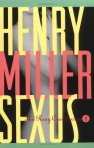
Henry Miller is to writing what Tom Waits is to music. Guttural, gritty, bold in a visceral way. Each of them glistens with Life and something unreachable between the words.
Tom Waits pours out his world in throaty punctuations as if his next breath might stitch the world together. Henry Miller plows out his world in articulate and scathing detail, at times lurid or tranquil iterations of his here and now.
And this, about creating — writing in particular — a taste of the germinal drive:
“…the original creation, which is taking place all the time, whether one writes or doesn’t write, belongs to the primal flux: it has no dimensions, no form, no time element. In this preliminary state, which is creation and not birth, what disappears suffers no destruction; something which was already there, something imperishable, like memory, or matter, or [the divine]…is summoned and in it one flings himself like a twig into a torrent. Words, sentences, ideas, no matter how subtle or ingenious, the maddest flights of poetry, the most profound dreams, the most hallucinating visions, are but crude hieroglyphs chiseled in pain and sorrow to commemorate an event which is untransmissible….A great work of art, if it accomplishes anything, serves to remind us…of all that is fluid and intangible…It cannot be understood, it can only be accepted or rejected. If accepted, we are revitalized; if rejected we are diminished. Whatever it purports to be, it is not: it is always something more for which the last word will never be said…”
~from “Sexus”, Book 1 of the Rosy Crucifixion
•
©2010–2025: Zoëtrope in Words. All rights reserved.
In the middle of reading Amy Kelly’s vibrant biography of Eleanor of Aquitaine, I came across Pierre Abélard. When Kelly wrote that his students “drank his poison” and fueled “the new Gothic spirit of inquiry”, I temporarily interrupted Eleanor and rabbit-trailed into one of the most progressive thinkers/philosophers of 12th century Paris. In so doing, I discovered a legendary love story. Héloïse and Abélard. Illicit love, a baby named after a scientific instrument (Baby Astrolabe, anyone?), secret marriage made public, and castration(?!?).
Abélard was forced to burn his interpretation of the trinity and lived as a hermit until his followers found him. The Oratory of the Paraclete was born. But fearing further persecution, he left and gave Héloïse residence at the Oratory when she and her nuns were expelled from their convent in Argenteuil. Then their letters begin. Soul-wrenching unhappiness interspersed with passion spent but far from ended, remembered, questioned, beckoned, Héloïse quarantined according to Pierre’s wishes for her safety.
When he died, his bones were secretly taken to the Paraclete and left under the care of Héloïse whose own bones came to rest beside Abélard’s. Their bones were moved several times and are now disputably lying in a tomb at Père Lachaise Cemetery in Paris.
A history of dichotomies, for although Héloïse loved Pierre, she only married him to appease her uncle, who had him castrated. What, what?

•
©2010–2025: Zoëtrope in Words. All rights reserved.
To begin: two women — two writers, two different centuries and countries.
Both make light of their societies. One was beloved, sought after and continues to enthrall people to this day in ways I fail to appreciate.
The other damages reputations with a whip and wit as sharp as the edge of a cliff. I seek her out.
I’m afraid I have no sense of mass appeal because the first writer is everyone’s sweetheart: Jane Austen.
The second one is Dorothy Parker. To me, her prose sizzles. She doesn’t waste words or effort explaining stories that are full of sentimental creatures mooning over unattainable men who end up being attainable, in set-up circumstances so similar from one story to another, that all you need to do is wash down the names and locations, white-out a few character differences, and you’ve got a new story with a slightly different flavour.
Like Austen. (Defies reason, almost. Because I admire Elizabeth Gaskell and her cronies.)
Clearly, I have no idea what makes Austen appealing. I’ve tried, believe me. Northanger Abbey was my first. It is clear to me why the publisher who bought it, refused to publish it for a long time. Wasn’t it posthumously published? I won’t bother to regale anyone with the plot–it is trite and wasteful, predictable and Austen plunges through its climax as if it were an afterthought (I think that’s her point, the triviality of it). I get it. It’s a bald chase mocking the frivolity of Austen’s world. I just don’t know how someone could write story after story of the same thing, dressed up in different gowns, among different friends, in different (or sometimes, the same) towns.
In most cases, prolific doesn’t equate quality. Out of the few prolific writers I’ve been able to sink my teeth into, Daphne DuMaurier stands out, Ruth Rendell, Margaret Atwood, Neil Gaiman, and God help me, there are moments…Mary Stewart. I have an enduring affinity for Agatha Christie (aka Mary Westmacott), thanks to my grandmother. (I like how Christie referred to her method of writing as a “sausage factory”. Clearly, the woman humored herself, all the while owning her craft like few others.)
And Ursula Le Guin. A mighty writer that infiltrates my thoughts consistently with her “working metaphors”.
Always Coming Home
Another author I find delightful: Charles Dickens. Then I made the mistake of reading his biography. The more I find out about how writers lived and what they really thought, how they worked, etc., the less their writing inspires me. The mere idea that Dickens’ character, Flora Finching in Little Dorrit (a novel I am rather fond of), was based on his real-life first love, opened up her frailty. Such arrogance to use a person in such a vulnerable way. And yet, he handles her with a pity that taps into sentimental care in a manner many writers don’t, so this added a lingering under-layer of insight to Dickens for me.
But I digress. Obviously.
Back to Dorothy Parker. A recent discovery. And a welcome one. She adds levity to her writing. Anyone who is quoted as saying when asked to use “horticulture” in a sentence, “You can lead a horticulture but you can’t make her think”, has my giggles and my admiration. Not that I am anyone notable enough from which to seek out admiration. But still, this is a writer who I needed, just about now. Short stories, poems that don’t take themselves too seriously, like “Bric-A-Brac”, and letters in which her brevity is charged with honest criticisms of her own work–she knows she doesn’t run with the F. Scott Fitzgeralds. But with her bold wit and clever honesty, she is refreshing. Light, talented, and poignant.
•
©2010–2025: Zoëtrope in Words. All rights reserved.
“Fairy tales are more than true: not because they tell us that dragons exist, but because they tell us that dragons can be beaten.” ~ NG [a disregarded man]
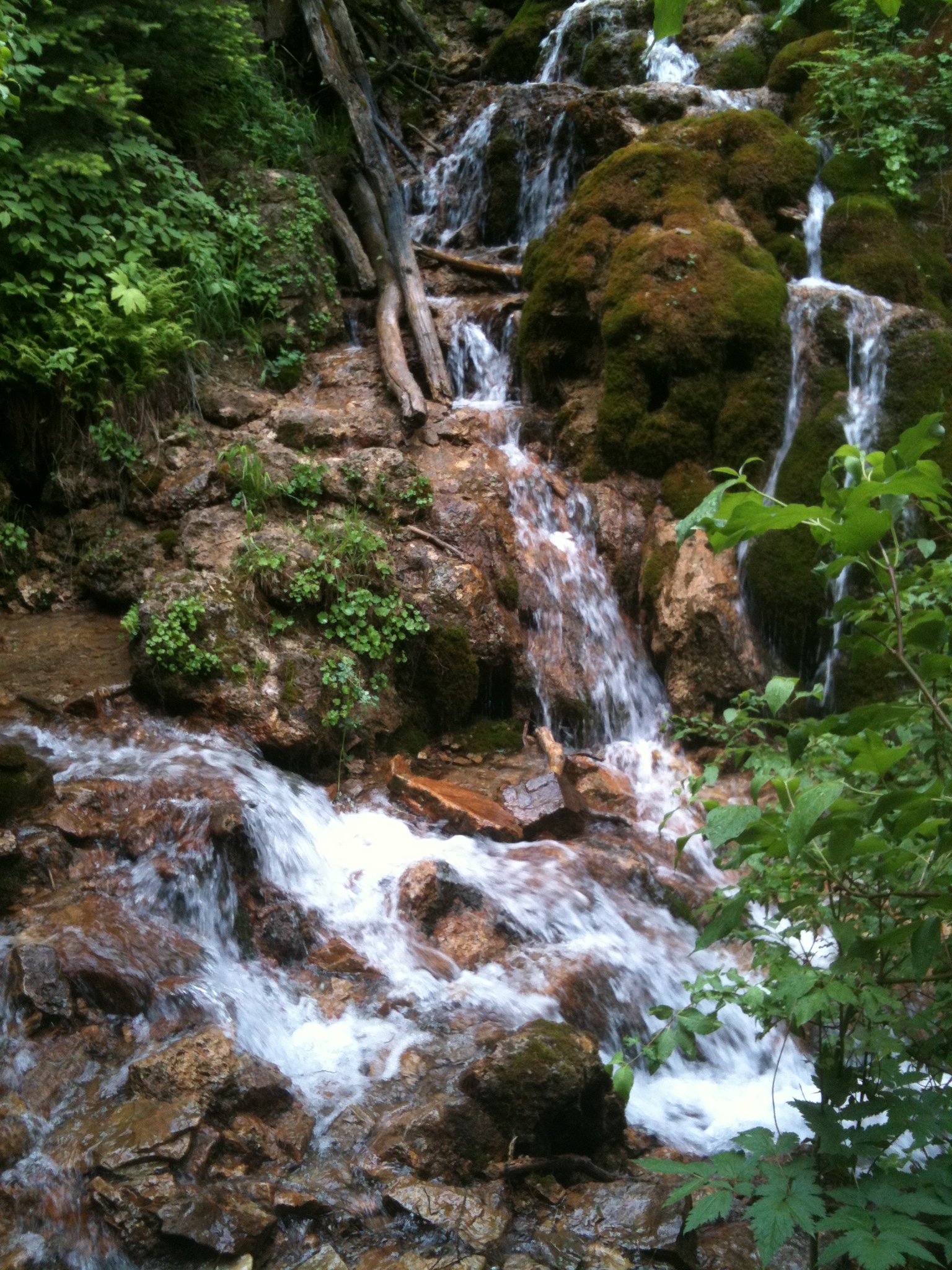
I grew up playing in the wrinkles of the Rocky Mountains.
On winter ski lifts, the fierce contrast framed snow against evergreens as far as I could see, my lips frozen beyond speech.
In summer, rugged sun-spangled cliffs, slashed by falling rivers and velvet moss, danced in the light.
Too many times I hung over the rushing creek dangling my shoes from the thick branch that offered me a place to sit and memorize the earth, the clouds, the whirling worlds alive before my eyes and below my feet. Till one time my shoe leapt into the froth below. What was a girl to do? Kick the other one in to join its mate. Having ridiculously tender footsoles, I hobbled painfully home never regretting my loss.
Now, the remembrance of the footpath, the tree, the bridge over the wide creek throws me into clarity. And fairytales become real again. Dragons can be conquered, but I have to remember that.
Earlier than NG [the disregarded man], G.K. Chesterton took it deeper. He said, “Fairy tales, then, are not responsible for producing in children fear, or any of the shapes of fear; fairy tales do not give the child the idea of the evil or the ugly; that is in the child already, because it is in the world already. Fairy tales do not give the child his first idea of bogey. What fairy tales give the child is his first clear idea of the possible defeat of bogey….”
I didn’t get to read fairytales until I was old enough to read for myself. I didn’t have access to them until I was out of grade-school. (Maybe that’s why the bogeyman wouldn’t ever go away.) By then, I considered myself too mature for them. Finally, I grew old enough again to read them. Beginning with Shel Silverstein’s ‘The Giving Tree’, like a pent-up wind released, they gave my imagination somewhere to go.
Then, I wanted to waste nothing in the making of tales. Poetry came first. I never thought I’d be able to commit to a novel, even though it ran through my brain over and over. Poetry is a quick glance, a smile, a nod, an embrace and then you’re done. Maybe a re-visit here and there to tweak it. But a novel, now that’s a marriage. Too many novels turn pretentious at some point, woody at others, and the risk to make every single word draw the story out seemed so daunting. When I read “Fugitive Pieces” by Anne Michaels, I knew I had to at least try.
Anne said in an interview, “You spend your time when you’re writing erasing yourself. The idea is to get out of the way of it.”
I knew I could do that…get myself out of the way.
About poetry, she said:
“…it’s such a good discipline for a novelist: it makes you aware that even if you have four or five hundred pages to play with, you mustn’t waste a single word.”
Since poetry’s my practice, this, too, seemed possible. I was aching to try. In the folds of life, word by word, ‘Delicate…‘ winked its way out. Part gothic, part myth, history, love and revenge, it’s a fairytale that brushes against the mystic. (But isn’t that the nature of all fairytales?😉)
“I Knew You Were Waiting” ~ Aretha and George
•
©2010–2025: Zoëtrope in Words. All rights reserved.
~Purity.
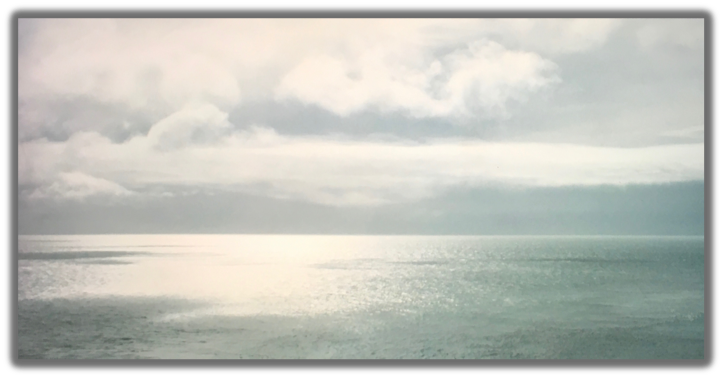
The purity of words.
The purity of saying the very thing you need to say, reading the word apropos to the moment, seeing the familiar call of another soul in another place who speaks your thoughts — the rare taste of the divine in the common moment, calling the common moment out.
Whitman is tactile. Colette, vivacious. Both speak and the world quiets down.
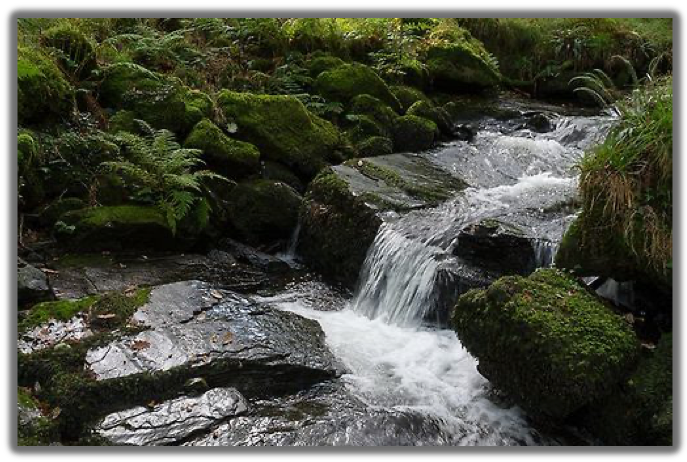
Whitman prepares, Colette illustrates.
“Beautiful dripping fragments, the negligent list of one after
another as I happen to call them to me or think of them,
The real poems, (what we call poems being merely pictures,)
The poems of the privacy of the night,…
drooping shy and unseen that I always carry,…” — from “Spontaneous Me”, Walt Whitman
“Ask me…I could tell you…the dirge, the moaning in a minor key of the two pine trees that lulled my sleep, and the youthful voice, sweetly shrill, of my mother calling my name in the garden. I could open for you the books over which was bent my forehead…and in a puff I could blow away…the dark, wrinkled faces of the pansies,…which, innocent young pagan that I was, I pressed between the pages of a book. You will hear the hooting of my shy owl, and you will feel the warmth of the low wall, embroidered with snails, where I propped my elbow. You will warm your arms, folded one upon the other…” — from “Earthly Paradise”, Colette
The particular paragraph above echoes the piece that first introduced me to Colette. A chapter from “My Mother’s House” in which her mother, from the garden and from the aching spaces in her soul, called her children home — “Where, O, Where are the Children?”. I’d never read anything quite so unsettlingly pure. It was then I was riveted with writing.
Riveted with the purity of words.
•
©2010–2025: Zoëtrope in Words. All rights reserved.
“The possession of knowledge does not kill the sense of wonder and mystery. There is always more mystery.” ― Anaïs Nin
“The role of a writer is not to say what we all can say, but what we are unable to say.” ― Anaïs Nin
“If you do not breathe through writing, if you do not cry out in writing, or sing in writing, then don’t write, because our culture has no use for it.” ― Anaïs Nin
“We travel, some of us forever, to seek other states, other lives, other souls.” ― Anaïs Nin
“Each friend represents a world in us, a world not born until they arrive, and it is only by this meeting that a new world is born.” ― Anaïs Nin
•
©2010–2025: Zoëtrope in Words. All rights reserved.
 Zoëtrope in Words